
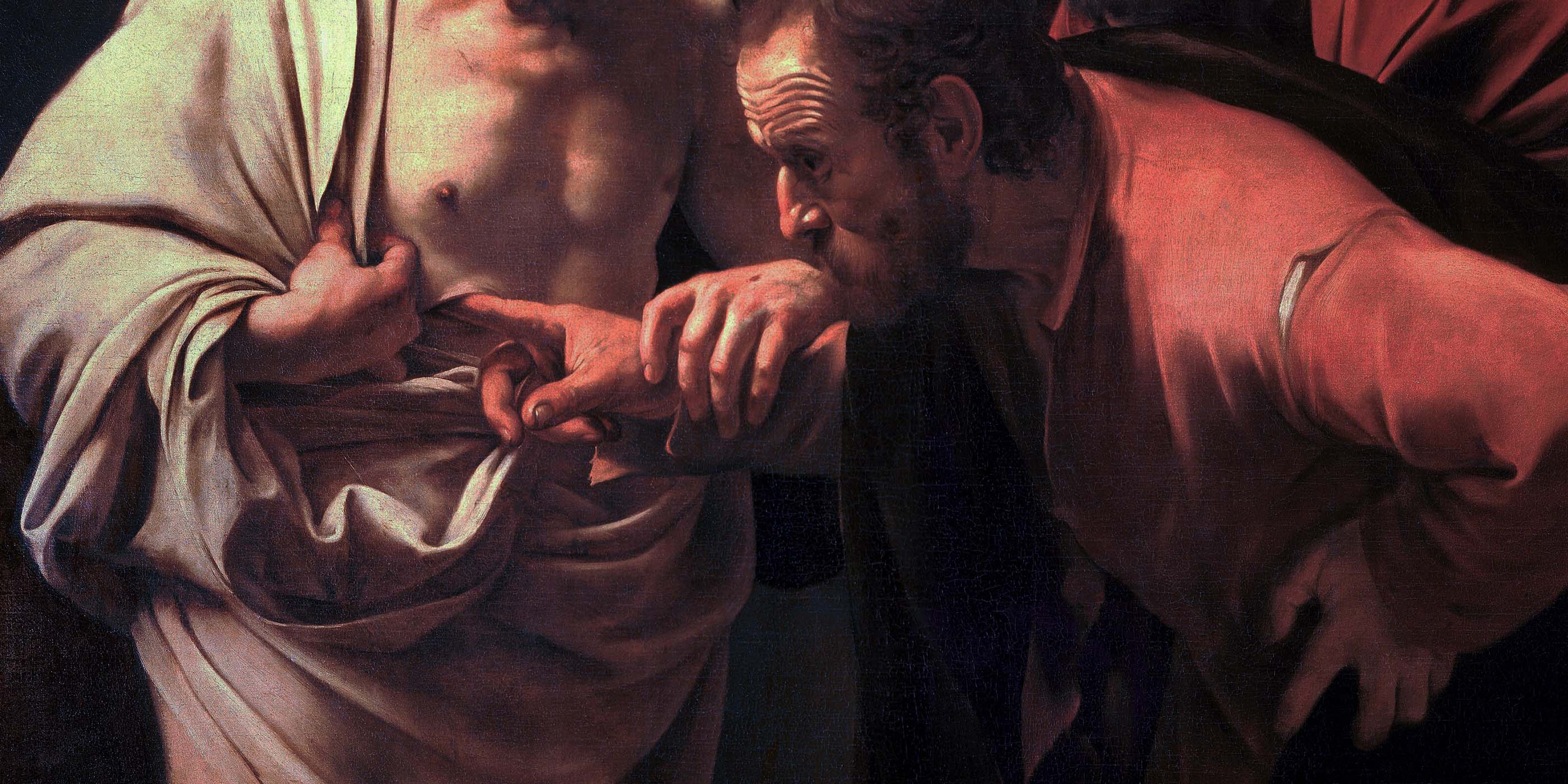
Image credit: The Incredulity of Saint Thomas-Caravaggio (1601-2)
Back in the early 2000s, I opened my first Gmail account and spent my time happily surfing YouTube. I was around 8 years old. We were transitioning from that early “Wild West” internet to today’s hyper-optimized, hyper-monetized digital environment, but back then, everything was just fun (or at least it was for me, as a kid). It was all about chatting on Messenger, sharing silly videos and, later in my teens, writing super long status updates. You had real online friends, connected with people you didn’t know, and even built lifelong friendships with strangers. I actually know someone who met his wife playing League of Legends (or something similar). Weird, right? I also knew others who found their tribe in those strange physical-meets-digital spaces where people gathered to play: internet cafes. It was a real paradox, meeting in person just to play online. This “Designer’s Confession” is about this nonsense we are living.
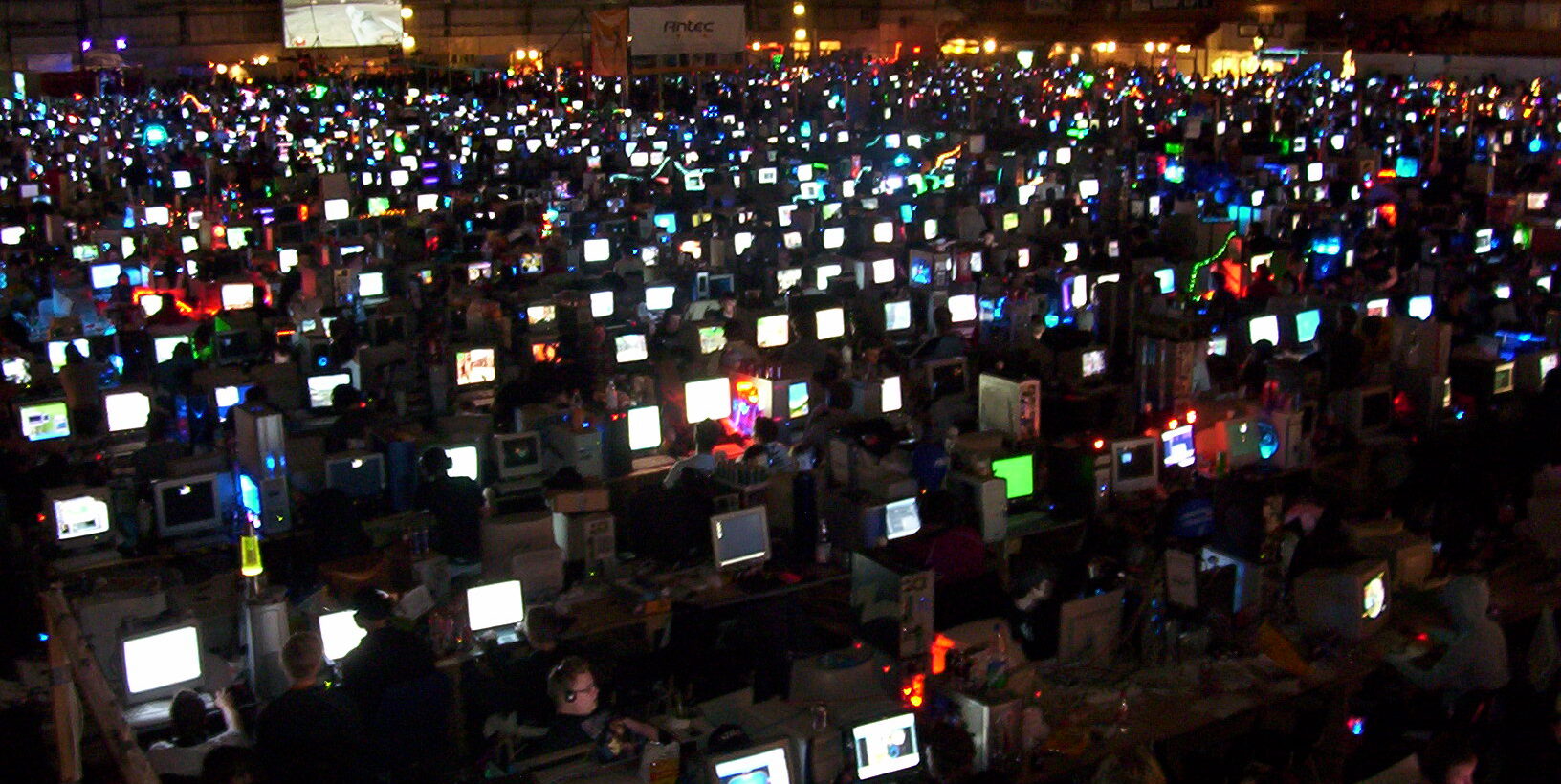 Winter 2004 DreamHack LAN party, a massive digital festival held in Sweden. Photo by Toffelginkgo, CC BY-SA 3.0, via Wikimedia Commons.
It wasn’t perfect, of course, but it felt safer than it does today. What feels different now is that back then, there wasn’t this constant drive to blend everything into physical reality. What happened online stayed online. Games weren’t hyper-realistic 3D versions of real life, and online content felt genuine. A picture of a coffee shop was just a picture, not a 3D-rendered mock-up of a super clean, “on-brand” space. We didn’t have Instagram accounts pretending to hold the cure for cancer in some weird juice produced in Albania (run in real life by a guy in a basement with a tiny ad budget, great PR skills and outstanding design).
As a designer working in communications, I realize I’m often part of building that illusion. After all, advertising is a gentle lie, and so is branding. We’re selling a point of view, convincing people to trust it, or shaping a perspective around an idea. We are dream creators, but we are also architects of illusion. Dreams might come true, but illusions are just empty boxes pretending to be full. Designers are fundamental cogs in this machine. We like to add a bit of sparkle and pretend, “No, we’re the good ones.” But deep down, when you understand the real purpose of your work, 65% of the time, you aren’t. We’re just engines in a giant machine of consumerism, creating better products to be better consumed, better displayed and more liked. It has always been this way. Nothing new. The creatives who signed the First Things First manifesto back in the day can confirm that.
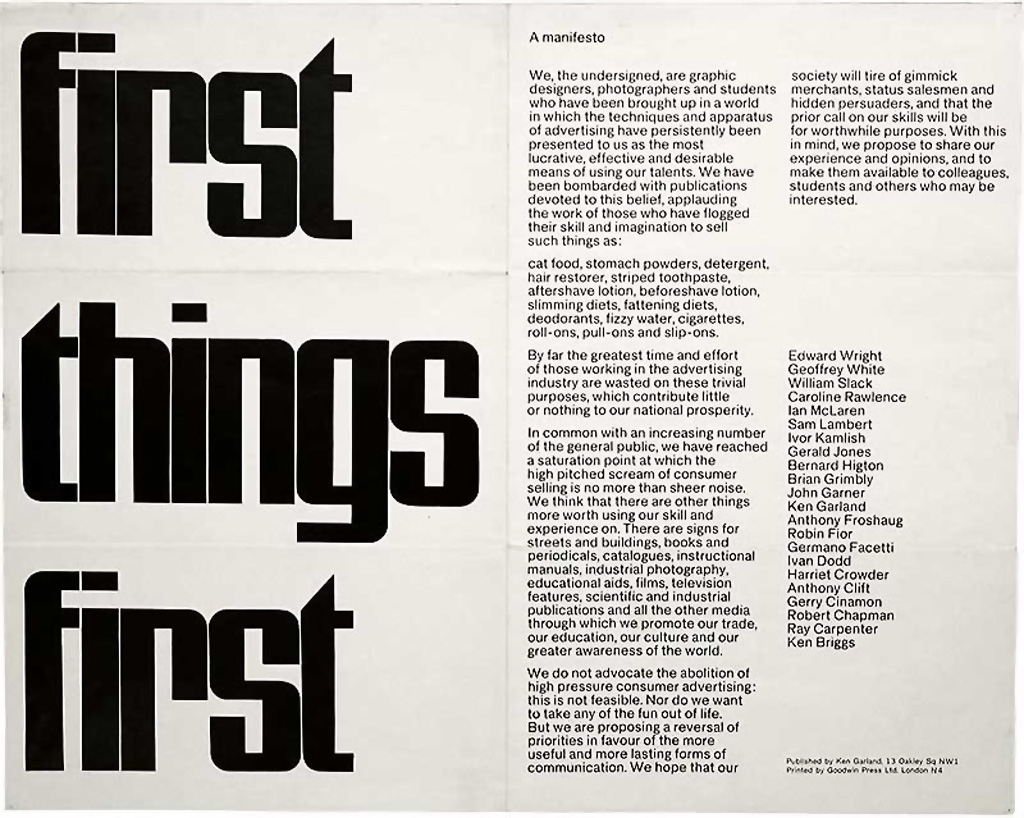 First Things First 1964. Written, designed and self-published by Ken Garland.
Regardless, creating these illusions used to be much harder. Today, nothing and no one can be fully trusted: not your data, your cookies, your likes, your messages or your calls. Sometimes, when I receive a strange phone call, I worry it might be my bank with an emergency I actually need to handle, or maybe that dream client finally reaching out. But when I answer, I’m afraid to speak, because the person on the other end might not be who I think they are. It might just be a scammer trying to clone my voice. What kind of world is this?
Sometimes I think, “Oh, I should create video content, maybe start a podcast or a YouTube channel for the magazine.” Then the paranoia hits. I start having nightmares where someone steals my face, my voice and my entire persona to create a digital version of me. Am I crazy? These things are already happening.
Crazy or not, I’ve developed serious trust issues with the “online world,” a distrust that is spreading beyond the screen faster than ever. Today, it’s hard to tell what’s real from what isn’t. I understand that for this project to reach its potential, I need to be “out there.” Or is it “in there”? But this future of ours is not what I dreamed of when I watched Charlie the Unicorn on loop in 2005 with my friends in the school computer lab. The internet promised us infinite possibilities back in the 1990s, but it ended up becoming a perfect prison of mirages.
Yours truly,
If you’re also questioning the role of design in this moment, you might find these articles and resources relevant:
I am the problem: A Designer’s Confession
How does ChatGPT Work? Grasping Its Full Impact on Creatives
The World of Tags, Obsession and Vibes Culture