
Dear Amigos,
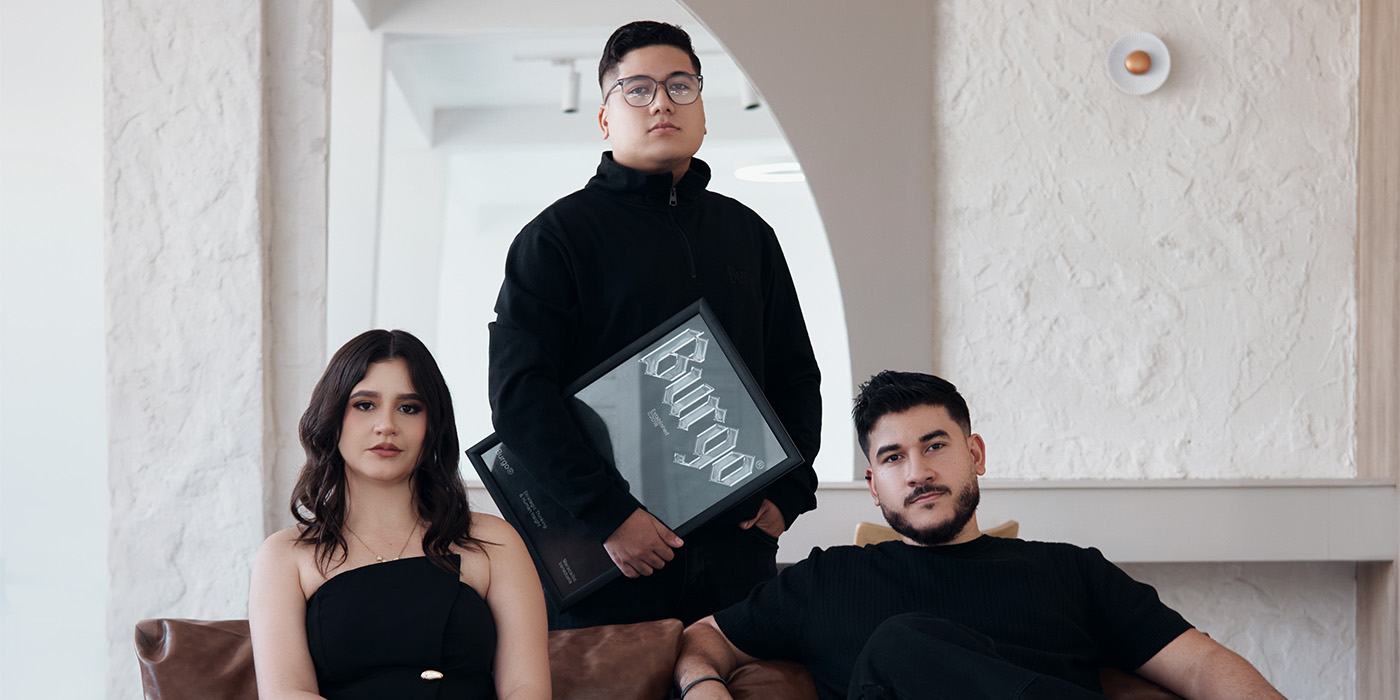
Last year, we explored how Cruzada Supply became a rich resource for creatives, effectively redefining creative boundaries within Venezuela. But behind every crisp texture and unique digital asset lies the strategic engine of ByBurgo. Based in Maracaibo, this studio has quietly built a recognizable identity through a well-balanced approach to branding and art direction. Today, we sit down with the team to discuss their initial inspirations, their straightforward design philosophy, and how they manage to stay freshly made in an ever-evolving industry.

What happened first: Burgo or Cruzada?
C/B: “Burgo came first. Cruzada came when we realized that the work behind the work is just as interesting as the work itself.
Every project has a process, the research, the decisions, the thinking that never makes it into the final file. We wanted a space to share that. Not as a portfolio, but as a resource. Something built for creatives who want to understand how ideas actually get made.
So Burgo is where we build. Cruzada is where we show how.”
Why Cruzada Supply?
C/B: “We wanted to make the invisible part of creative work more accessible.
The name follows a similar thread to Burgo. If Burgo comes from the idea of a place that protects and enables growth, Cruzada comes from the notion of a mission, something driven by intention.
We didn’t see many platforms, especially from Venezuela, creating resources for creatives. Most of what existed came from very different contexts. So part of Cruzada was also about that: contributing from our reality, with our way of working.
And in a sense, it became a space to experiment, to test ideas, to package knowledge into usable formats, and to explore new ways of creating value beyond client work.”
What impact does being a Venezuela-based studio have on your business? What challenges have you encountered?
C/B: “Being based in Venezuela has shaped almost everything about how we work: our pace, our mindset, our level of adaptability, even the kind of resilience we consider normal.
Of course there have been a lot of challenges. But we prefer to say that working from here taught us to build with a different kind of resourcefulness.
When we started, the context was uncertain, and that meant we had to be very intentional from day one. In many cases, early projects were less about profit and more about proving our value, sharpening our thinking, and building a body of work that could open bigger doors later.
At the same time, that same context gave us opportunities we might not have had otherwise. Because the local creative landscape was shifting so much, we were able to step into projects with a level of responsibility and scale that accelerated our growth early on. That experience became a huge part of our foundation.

Another big challenge was the creative awareness. Especially in the beginning, a lot of clients weren’t necessarily expecting the level of thinking we were bringing into the work: research, positioning, market analysis, long-term business context. So there was a constant effort to not only do the work, but also explain why it mattered.
In that sense, being based in Venezuela has made us more flexible, but also more intentional. We’ve had to learn how to combine structure with warmth, systems with human connection. We were inspired by more structured studio models from abroad, but we also understood very quickly that our context required a different rhythm, one where trust and closeness matter just as much as process.
That mix has become part of our practice.
And in a very real way, the work we were able to build here is what later allowed us to connect with clients and collaborators outside of Venezuela. So while the environment came with its difficulties, it also gave us perspective, resilience, and a portfolio that carries real weight.”

Has the growth of AI impacted your business with Cruzada in any way? What about client perceptions?
C/B: “Genuinely, yes, but probably not in the way people expect when they ask this.
It hasn’t replaced anything. What it’s done is compress the distance between thinking something and actually seeing it. We can test a direction, hate it, try another one, and get somewhere useful, all before we’ve committed to anything. That speed changes the rhythm of the work in a good way.
Because here’s something nobody talks about enough: one of the hardest parts of creative work is just knowing if you’re going in the right direction. AI helps answer that question earlier.
What it hasn’t changed is where the actual value lives. The output moves faster, but the taste, context, and judgment behind it? That’s still entirely on you. Without that, everything starts looking like everything else, and right now, a lot of things do.
Client perception is split. Some people hear “AI” and immediately feel like the work cost less, so it should be worth less. Others get it right away. It’s a tool, and what matters is who’s holding it. We’ve learned to be pretty upfront about that distinction.
On the Cruzada side specifically, it’s been a real unlock. Lower production friction means we spend more time on ideas and curation, less time on logistics.
So, AI didn’t change what we do. It changed how fast we get to find out if we’re doing it right.”

What advice would you give to a young designer opening their own studio?
C/B: “Understand what you’re actually signing up for.
There’s a version of having a studio that looks great from the outside: choosing your projects, building something yours, creative freedom. That part is real. But so is the part where you’re managing clients, handling finances, making decisions under pressure, and designing a lot less than you expected.
You go from working 9 to 5 to working all the time, without guaranteed pay, without guaranteed vacations. It’s a completely different mindset. Not a bad one, but a different one.
A question worth sitting with before you decide: imagine a completely normal day living the life you want. Not the highlight reel, the actual Tuesday. What are you doing? What are you responsible for? Does owning a studio fit that picture, or does being a really excellent freelancer or collaborator fit it better? Neither is the wrong answer..
Also, before you jump in, go down the rabbit hole of what running a business actually involves. Taxes, legal stuff, operational weight. Not to scare yourself, just to go in with open eyes. Because the gap between the idea of a studio and the day-to-day of one is real, and the designers who last are usually the ones who were ready for both versions.
One last thing: it’s not a permanent decision. You can try it, learn from it, and change direction. Nothing you build disappears. It all compounds..
So the advice isn’t don’t do it. It’s: do it knowing what it is.”
What insights could you share with other designers about finding leads or clients?
C/B: “Two things: show up, and build real relationships.
Showing up means being visible, consistently, on whatever platforms make sense for you. Not exhausting yourself trying to be everywhere, but making sure people can find you and understand what you do. That part is non-negotiable.
But visibility only gets you so far. Most real opportunities don’t come from being the most talented person online. They come from being someone people actually trust and enjoy working with.
Here’s something worth internalizing early: a great portfolio will get you admired by other designers. Clients are a different audience. They’re not thinking about craft the way we do. They’re thinking about their problem, their deadline, their risk. They want someone who makes things easier, not someone who makes things impressive. The relationship is what gets you in the room. The portfolio just confirms you belong there.
It also means being honest about fit. Say no to projects that aren’t right for you, and when you do, point them toward someone who’d actually be great for it. That kind of integrity compounds over time in ways that are hard to measure but very easy to feel.
Growth in this field rarely comes from chasing every lead. It comes from building the kind of relationships that quietly bring the right ones to you.”

Do you collaborate with other studios or designers? Or is everything in-house?
C/B: “Both, depending on what the project needs.
We have a core team that stays close to everything. People who understand how we think, how we build things, what we care about. That’s non-negotiable for us because it’s where the consistency lives.
But we collaborate a lot. Sometimes that means bringing in a specialist for a specific part of a project, an illustrator, a motion designer, an architect. Other times we’ve done something a bit different: embedded ourselves directly inside another company’s brand team, almost like a satellite studio within their structure. That’s been one of the more interesting ways to work, because you get a real look at how decisions get made from the inside.
Either way, what you’re really building over time is a circle of people you trust. Knowing who to call, and when, ends up being one of the more underrated parts of running a studio.”
How is your design team structured?
C/B: “Intentionally lean.
We have a Project Manager who handles the operational side, communication, timelines, priorities. That role keeps everything moving and gives the rest of the team space to actually focus.
We work closely with a brand strategist who helps shape the foundation of each project before anything goes into production. Concept, narrative, direction. Getting that layer right early makes everything downstream easier..
From there, designers take on the work depending on what the project calls for. And beyond the core team, we have a network of collaborators we bring in when needed, people we trust and have worked with before.
The model is closer to a boutique agency than a traditional studio. Small core, strong collaborator network, and a shared understanding of how things should run.”

In your opinion, what will the job description of designers look like in the next decade?
C/B: “Less executor, more curator.
A lot of the production side is becoming accessible to everyone, which means the value shifts toward the thinking behind it. Understanding context, building concepts, knowing why something should exist and who it’s actually for. That layer becomes the job.
We also think the designer-as-strategist role is going to grow. Not just making things look right, but shaping the direction before anything gets made. The visual is almost the last step.
And then there’s a cultural shift coming that we find genuinely exciting. Right now everything is starting to look the same. Minimal, clean, UI-adjacent, interchangeable. At some point that stops being interesting, and when it does, designers with a real point of view, a specific visual culture, something that’s unmistakably theirs, are going to stand out in a way that’s hard to compete with.
It happened before. When production constraints made everything look similar, people like Warhol came in and made something so distinctly their own that it changed the whole conversation.
We think that’s coming again. The designers who get there first will be the ones who spent less time chasing trends and more time developing a genuine perspective.”
So that’s where our energy is going.”
If you could go back in time, what would you do different in your creative practice/journey?
C/B: “Get a mentor earlier. A lot of what we know came from figuring things out the hard way, and that experience is real and worth something. But there’s a difference between learning through time and learning through someone who’s already been through it. The second one is just faster.
Having someone who could have told us where the real challenges were, what decisions actually matter, what’s worth stressing about and what isn’t, would have changed how we spent our energy in those early years.
It doesn’t replace the process. But it changes the quality of the problems you’re solving. Instead of spending years on questions that already have answers, you get to start earlier on the ones that don’t.
That’s the part we’d do differently.”
One design/creative project that inspired you to be who you are. Why?
C/B: “Honestly, we’d have answered this differently a few years ago. Probably with a lot more excitement about a specific project or campaign.
But the longer you do this, the more you realize it’s not really about the work. It’s about the people behind it. What stays with you isn’t the final piece, it’s how someone thinks, how they make decisions, how they’ve built something over time.
So instead of a project, we’ll give you the people: Chris Do, Daniel Vera, Michelle Poler, Ausias Pérez, Luis Palencia. Different backgrounds, different styles, but a common thread. For all of them, design and creativity is part of the picture, but it’s not the whole story. They’re builders, thinkers, people who understand that the work only matters if it connects to something larger.
That reframe to: “what kind of person inspires me?”, is probably the most useful shift we’ve made.”
ByBurgo operates with a fully-fleshed vision that extends far beyond simple aesthetics. Their work is a noticeable reminder that great design is often ethically focused and deeply rooted in its environment. Whether they are developing a custom brand identity at ByBurgo or expanding their important work with Cruzada Supply, their output remains delicate yet impactful. We can’t wait to see what this lighthearted yet professional team tackles next as they continue to elevate the Venezuelan design scene.
A type of Cami.